
Wedding Welcome Sign: Wording, Size and Printing
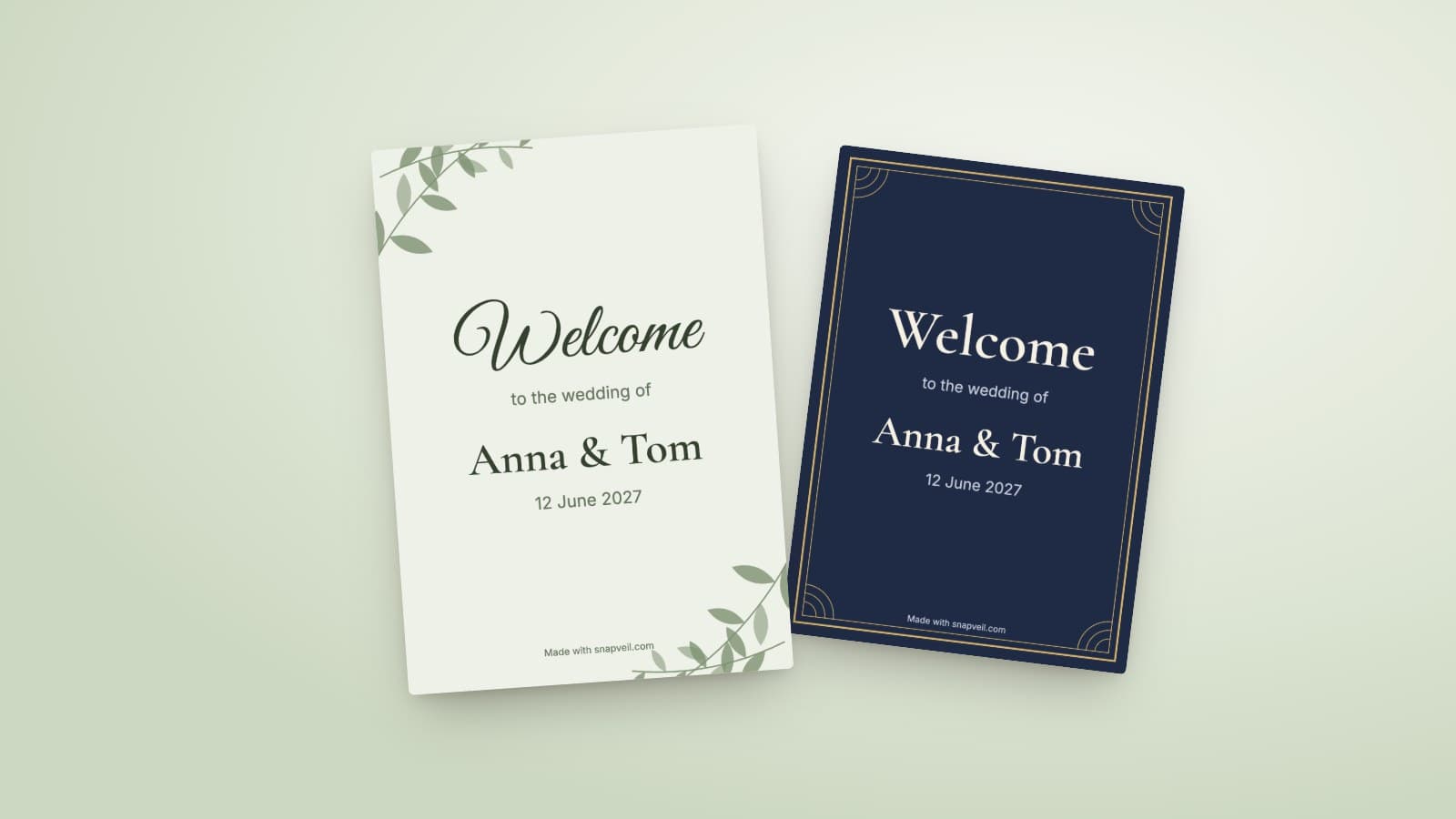
The welcome sign is the first piece of your wedding that guests see, before they even see you. It tells them they are at the right door, and on the day it gets photographed more often than the cake. Even so, it is often made in passing: a picture from the internet, a name dropped in, off to print. With a little thought about wording, size and position, it becomes a sign that earns its place at the entrance.
What belongs on a welcome sign
Three things are enough: a greeting, your names and the date. Everything else is a matter of taste, and less is nearly always better. A sign is read in passing, not studied.
The greeting sets the tone. "Welcome" is timeless and suits any celebration. If you prefer something more personal, write a full sentence. A few variants that have proved themselves:
- Welcome to the wedding of Anna & Tom
- So glad you are here
- Welcome to our big day
- We are saying yes, and you are part of it
- Willkommen, for a celebration with guests from abroad
For the names, first names will do. The date sits small underneath and later turns the sign into a keepsake that many couples frame and hang up.
Leave out anything that needs a second pause to read: schedules, requests to guests, long quotations. There are separate signs or the programme for those. One exception is a QR code for the photos, which is covered further down.
The right size
Size depends on where the sign stands and from how far away it is read. On a bar table in the entrance area, framed next to the guest book and the gift table, A4 works. Free-standing on an easel at the entrance, A4 looks lost. There it should be A3 at least, and many couples print larger still.
A rule of thumb for the lettering: for every metre of reading distance, the most important line needs roughly one centimetre of letter height, rather more than less. If the sign is meant to be recognisable from five metres, the two centimetres an A4 sheet allows are not enough.
Portrait is the normal case, because easels and frames are made for it. Landscape fits when the sign hangs on a wall or a fence.
Material and printing
For printing at home, use sturdy matte paper of 200 g/m² or more and put it in a frame. Without glass nothing reflects; with glass it looks more refined. For celebrations outdoors, a frame without glass is the safer choice.
Anything from A3 upwards goes to a print shop. They can scale the PDF to a larger format on request and output it on foam board or thick card. A board like that stands on the easel without a frame and weighs almost nothing. Ask for a matte finish. Glossy surfaces reflect sun and flash, and in your guests' photos there will be a white patch where your names should be.
Acrylic and wood look wonderful in pictures, but they cost many times more and take several weeks to arrive. If that is what you want, order in good time. For everyone else, printing on board gives the best ratio of effort to effect.
Do not order or print the sign on the last day. A week's buffer is enough to catch a typo, and there is one more often than you would think, above all in the date.
Where the sign stands
It belongs at the point where guests first wonder whether they are in the right place: at the entrance to the venue, on the path from the car park, or outside the hall. Put it at eye level. A sign leaning against a wall on the ground gets overlooked and blown over.
Outdoors, the easel needs weight or a sheltered spot. Two discreet clips hold the board on the easel; a sandbag on the back leg holds the easel on the ground.
Mind the light. If the sign stands in front of a window or in low evening sun, everyone arriving sees it against the light. A spot with light from the front or the side makes it readable and the photos in front of it better.
Designing a welcome sign yourself
With Snapveil's free welcome sign generator, the sign is done in a few minutes. Snapveil is our own product; the generator needs no account, and what you enter stays in your browser.
You enter the greeting, the line below it, your names and the date. Every line can be changed or left empty. Then you choose from 15 designs, ten colour palettes and three typefaces; the preview shows each design with your texts straight away. Botanical with a script typeface reads as romantic, art deco in midnight blue as festive, minimal with a modern typeface as calm and clear.
The PDF comes in A4 for printing at home and in A3 for the print shop. One thing matters when you print yourself: choose 100% scale in the print dialog so the margin stays even.
It looks best when the sign does not stand alone. Table numbers and place cards can be designed with the same designs, colours and typefaces, so entrance and tables match.
A QR code on the sign: sensible or too much?
A QR code at the entrance has one clear advantage. Whoever scans it on arrival has the photo gallery open before the first glass is poured. The pictures from the drinks reception, which otherwise vanish into private chats, land in the right place from the start.
To keep it from looking like a billboard, the code stays small and sits at the bottom, with a single line beside it. In the generator you paste the link to your gallery, and the code appears below names and date. On A3 it is a good five centimetres wide and scans from about half a metre. Guests therefore need to be able to step close; behind a barrier or high up on a wall it is of no use.
Do not rely on the sign alone. At the entrance everyone sees the code once; at the table they see it all evening. It works best in both places, for example on the table numbers as well. How the gallery behind it works is explained on the page about QR code photo sharing. With Snapveil, events with up to 250 photos are free, and guests need neither an app nor an account.
Just before printing
Read the sign aloud once, and have someone read it who has not seen it before. Are the names right, is the date right, is the weekday right if it is on there? Does the QR code scan from the printout, and does it really lead to your gallery?
After that, all that remains is to name someone who puts the sign up in the morning and takes it along in the evening. Many couples later hang it in the hallway. It is worth making sure it survives the day undamaged.
Frequently Asked Questions
Related Articles
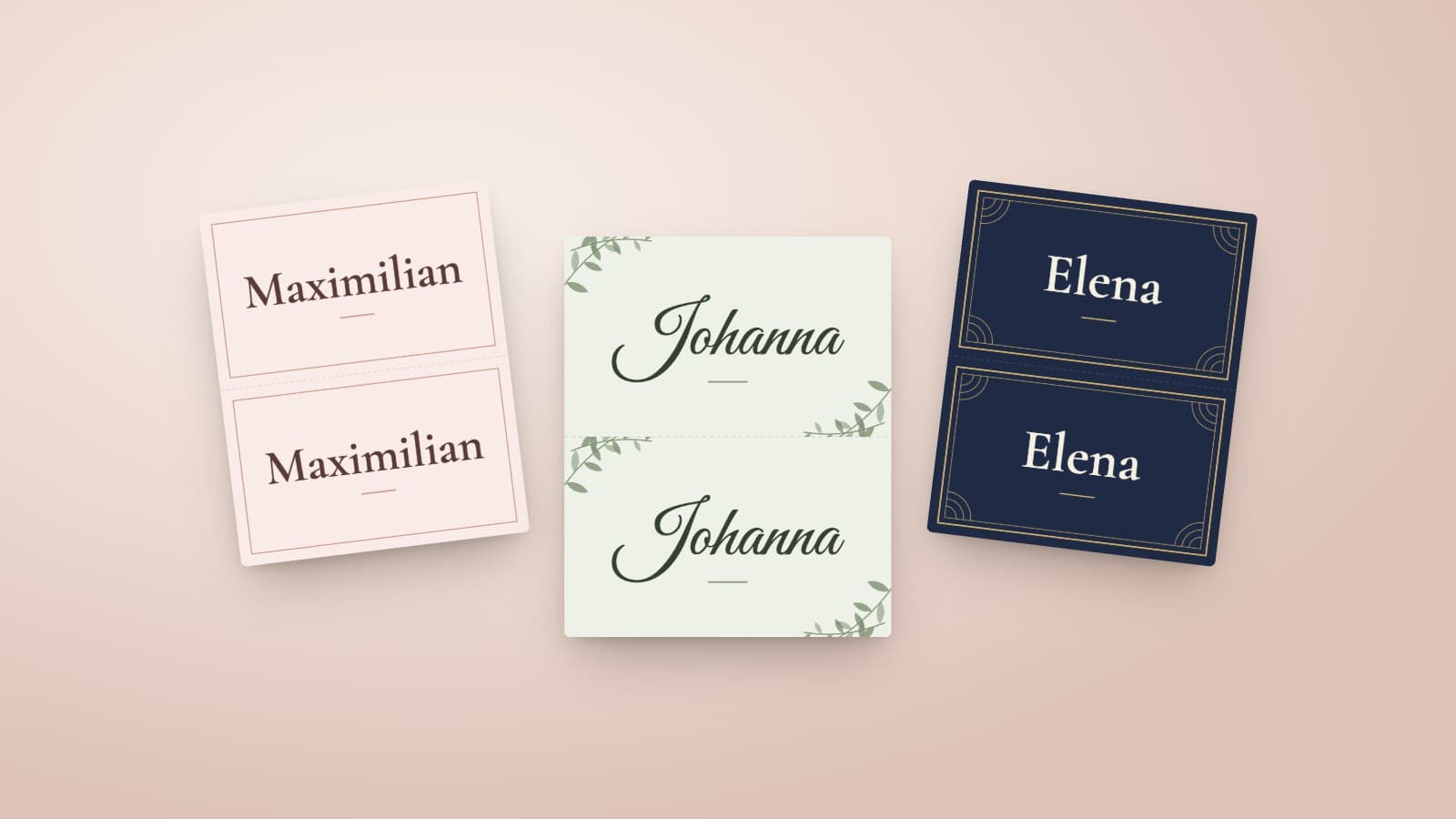
DIY Wedding Place Cards: Format, Paper and Printing at Home
How to make wedding place cards yourself: which format and paper work, what belongs on the card, and how a guest list becomes a print-ready PDF.
Read article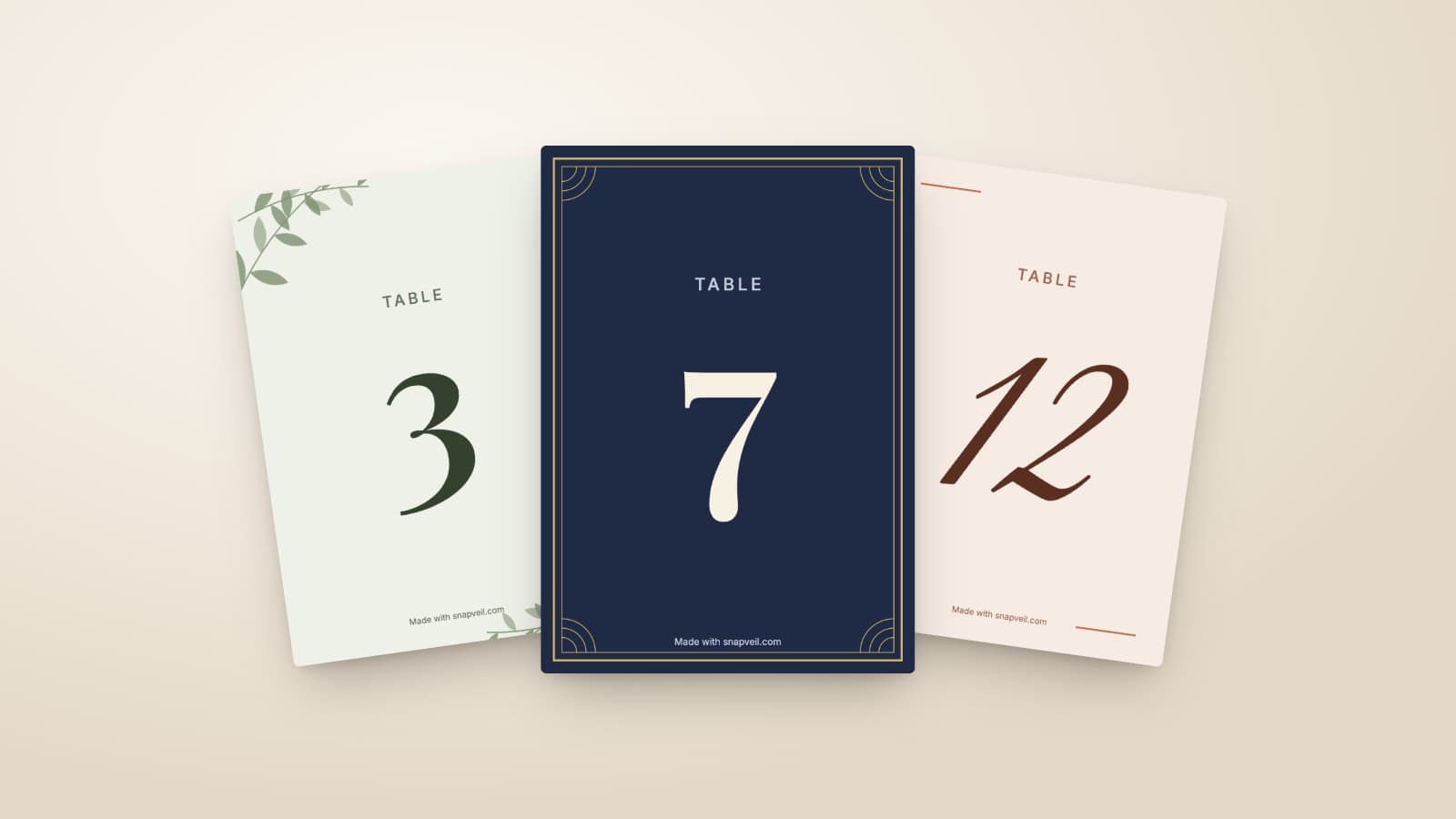
Wedding Table Numbers: Size, Placement and a Free Printable Template
How large wedding table numbers need to be, where they stand and what else goes on the card. With a free template to print at home in A6 or A5.
Read article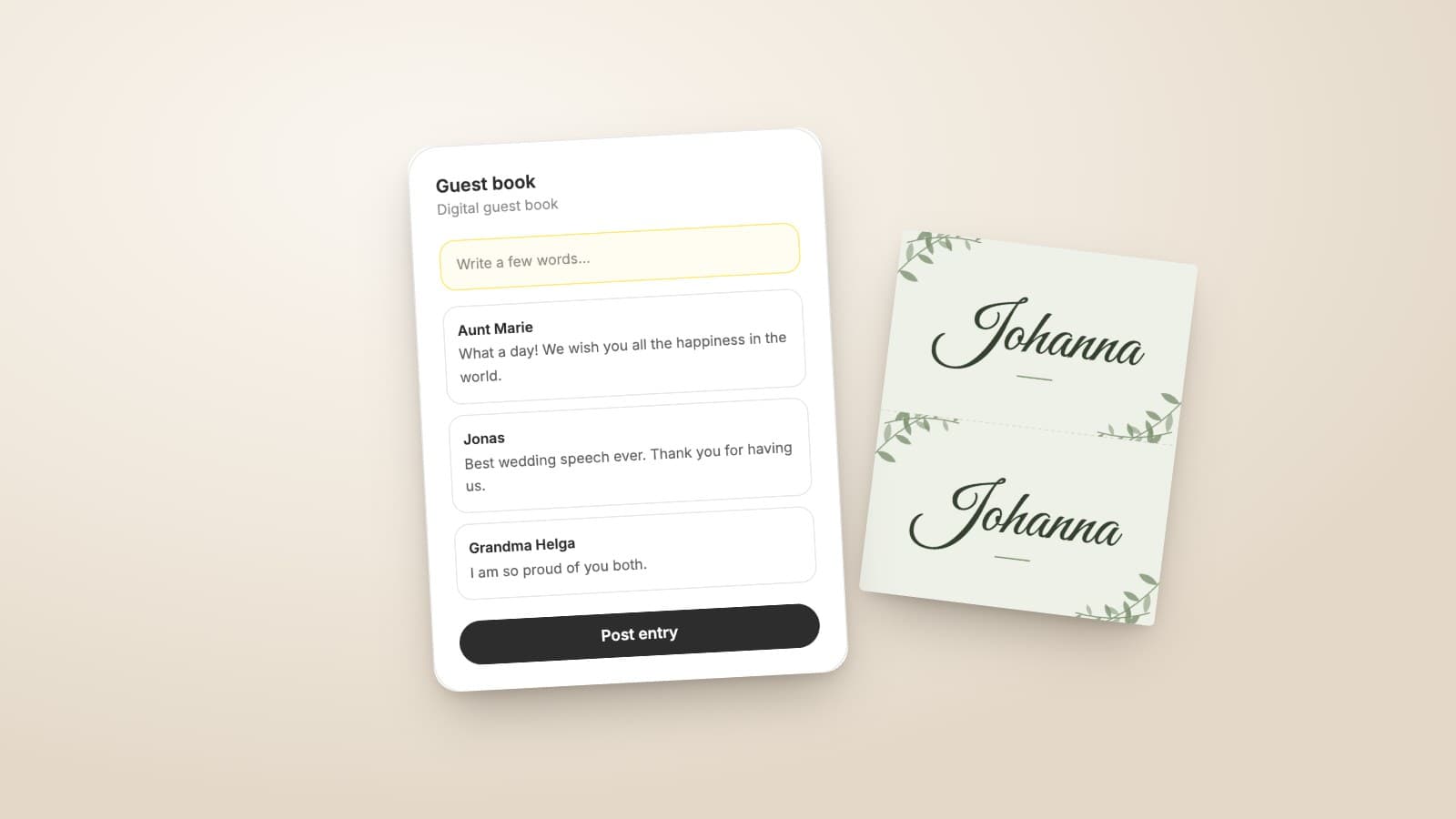
Digital Wedding Guest Book: How It Works and When Paper Is Better
What a digital guest book can do, where paper is still better, and how to get guests writing. With questions that help against the empty page.
Read article