
Wedding Table Numbers: Size, Placement and a Free Printable Template
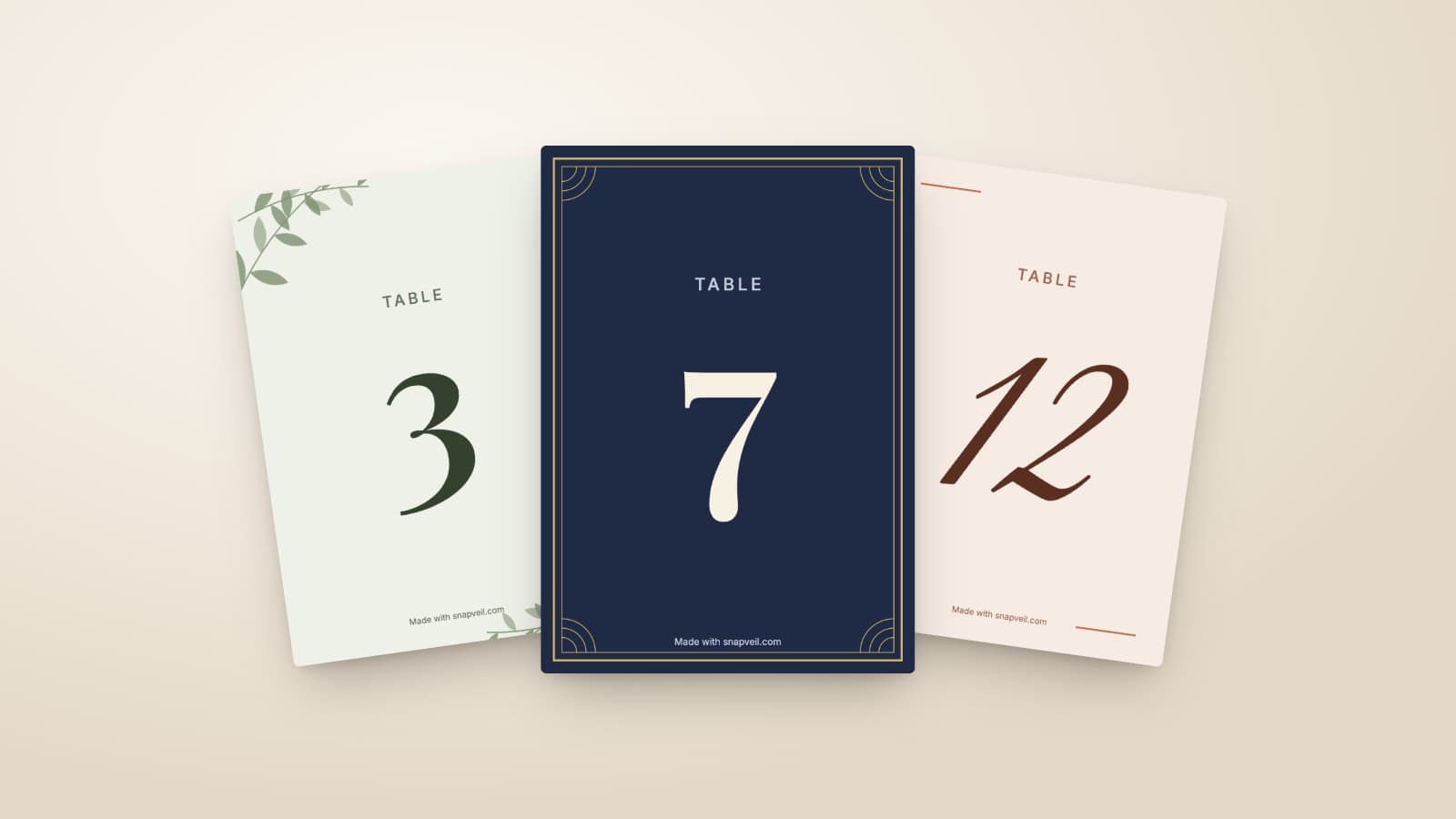
Table numbers are on nobody's list of big wedding decisions, which is exactly why they tend to fall into the final week. A number gets written on card, stuck in a holder, and everyone hopes it will do. Mostly it does. But between "will do" and "works well" lie a few decisions that take ten minutes and make the walk into the room noticeably calmer.
There are four questions: how large the numbers need to be, where they stand, what goes on the card besides the number, and how to get them onto paper without an evening of crafting.
What table numbers are actually for
They solve a single problem: eighty people need to find their seats quickly without anyone leading them there one by one. The seating chart at the entrance names the table; the number on the table confirms it. If either is missing, guests stand in the aisle with a glass in hand and ask their way around.
A second job arrives later in the evening. The staff bring the right menu to the right table, the DJ calls tables to the buffet, the photographer gathers groups for a picture. All three need a label that can be called across a room.
How large a table number has to be
What matters is the distance from which the number is read. In a small room with six tables, an A6 card of 10.5 × 14.8 cm is enough. From two to three metres the number on it is easy to make out. In a hall with fifteen tables, where guests search from the entrance, A5 is worth it. The card is twice the size, and the number stays readable over the heads of standing guests.
More important than the paper size is the numeral itself. It should take up most of the card and be set in a typeface where a 1 does not look like an I and a 7 does not look like a 1. Ornate figures look pretty on a screen and cost time on the night.
High contrast helps as well. A dark number on a light ground or the other way round, but no gold on cream and no pale grey on white. As soon as the lights are dimmed, such combinations disappear.
Where the number stands
The number belongs in the middle of the table, at a height that rises above the decoration. A card holder, a small picture frame or a block of wood with a slot is all it takes. If a tall flower arrangement sits in the centre, the number moves to the edge that faces the entrance.
For long banquet tables, one number is not enough. Put a card at both ends, and for very long tables one in the middle too. In that case print each number two or three times.
Think about the order in which the tables are numbered as well. Guests find their seats most easily when the numbers follow a visible logic, for example row by row from the entrance. Numbering by the importance of the guests makes sense to nobody but you, and it puts table 3 next to table 11.
What else can go on the card
The word "Table" above the number is common but not necessary. At a bilingual wedding it might read "Tisch" or "Tavolo". Your names or the date in a small line below turn the number into a piece that belongs with the rest of the stationery.
Some couples give their tables names instead of numbers: places they have travelled to together, favourite films, streets they have lived on. That is personal and gets people talking. It comes at a price: names cannot be sorted. Someone looking for "Lisbon" has to walk past every table; someone looking for table 9 walks between 8 and 10. A good solution is both, with the number large and the name small underneath.
The third option is a QR code. It turns the table number into the place where your guests hand in their photos. More on that below.
Designing and printing table numbers yourself
With Snapveil's free table number generator, all cards are ready in a few minutes. Snapveil is our own product; the generator runs in the browser without an account.
You enter the first and the last number you need. Up to 40 cards are made in one run, and the numbers can lie between 1 and 99. Then you pick one of 15 designs, one of ten colour palettes and one of three typefaces. The preview shows the first card with your details, and every design appears as a small thumbnail before you decide.
The PDF holds all numbers on A4 sheets: four cards per sheet in A6 or two in A5, each with cut lines. Two rules apply to printing. The paper should be at least 200 g/m² so the card does not sag in its holder. And the print dialog has to be set to 100% scale rather than "fit to page", or the cut lines will no longer line up.
If you plan to put the numbers in frames, check the inside measurement first. Many frames sold for 10 × 15 cm are half a centimetre smaller than A6, which means trimming the long sides slightly.
The QR code on the table number
Almost every wedding now has a QR code that guests use to upload their phone photos. The only question is where it stands. At the entrance everyone sees it once and forgets it. On the table number it sits in front of them all evening.
In the generator you paste the link to your gallery. Every card then shows a code with a short instruction below the number. The number stays large enough, and the code scans comfortably from arm's length. Without a link, the card remains a plain table number.
You get the link with a Snapveil event. Guests scan the code with their ordinary phone camera and upload in the browser, without an app or an account. Up to 250 photos are free; for a one-off €9.90 the gallery holds 2,000 photos in original quality. The details are on the page about QR code photo sharing.
One note from practice: scan the code from the printed card, not just from the screen. Only the printout shows whether your printer reproduces the fine squares cleanly.
Matching the rest
Table numbers look best when they do not stand alone. The same typeface and the same colour on place cards, table numbers and the welcome sign make a celebration look planned, even if everything came out of the printer on the same afternoon. The three templates share designs and palettes, and your choice is kept when you switch between them.
In the end, the best table number is the one nobody thinks about. Guests look at the seating chart, walk to their number and sit down. If that is done in five minutes, the card has served its purpose.
Frequently Asked Questions
Related Articles
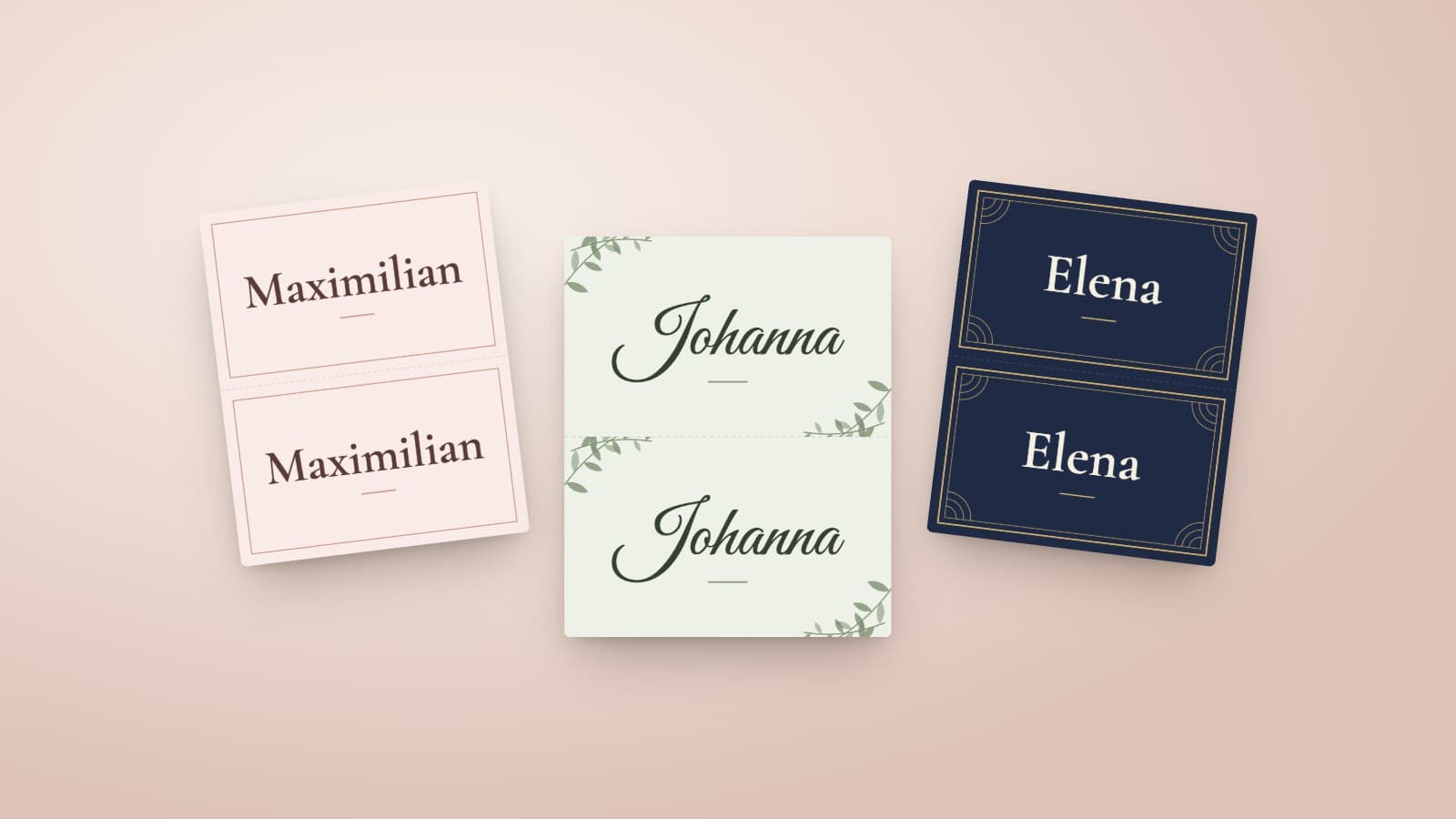
DIY Wedding Place Cards: Format, Paper and Printing at Home
How to make wedding place cards yourself: which format and paper work, what belongs on the card, and how a guest list becomes a print-ready PDF.
Read article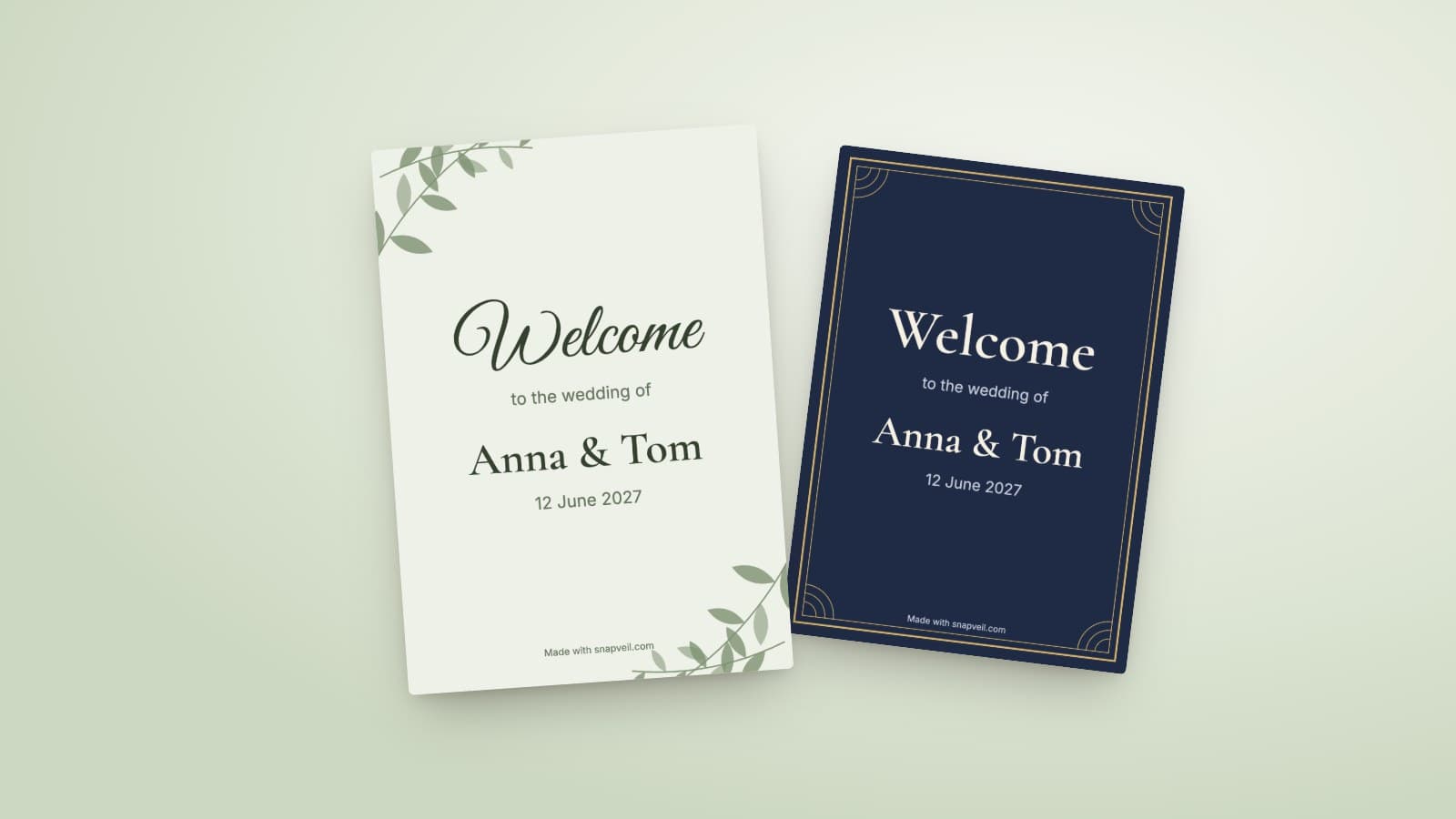
Wedding Welcome Sign: Wording, Size and Printing
What belongs on a wedding welcome sign, which size works at the entrance and how to print it. With wording ideas and a free template in A4 and A3.
Read article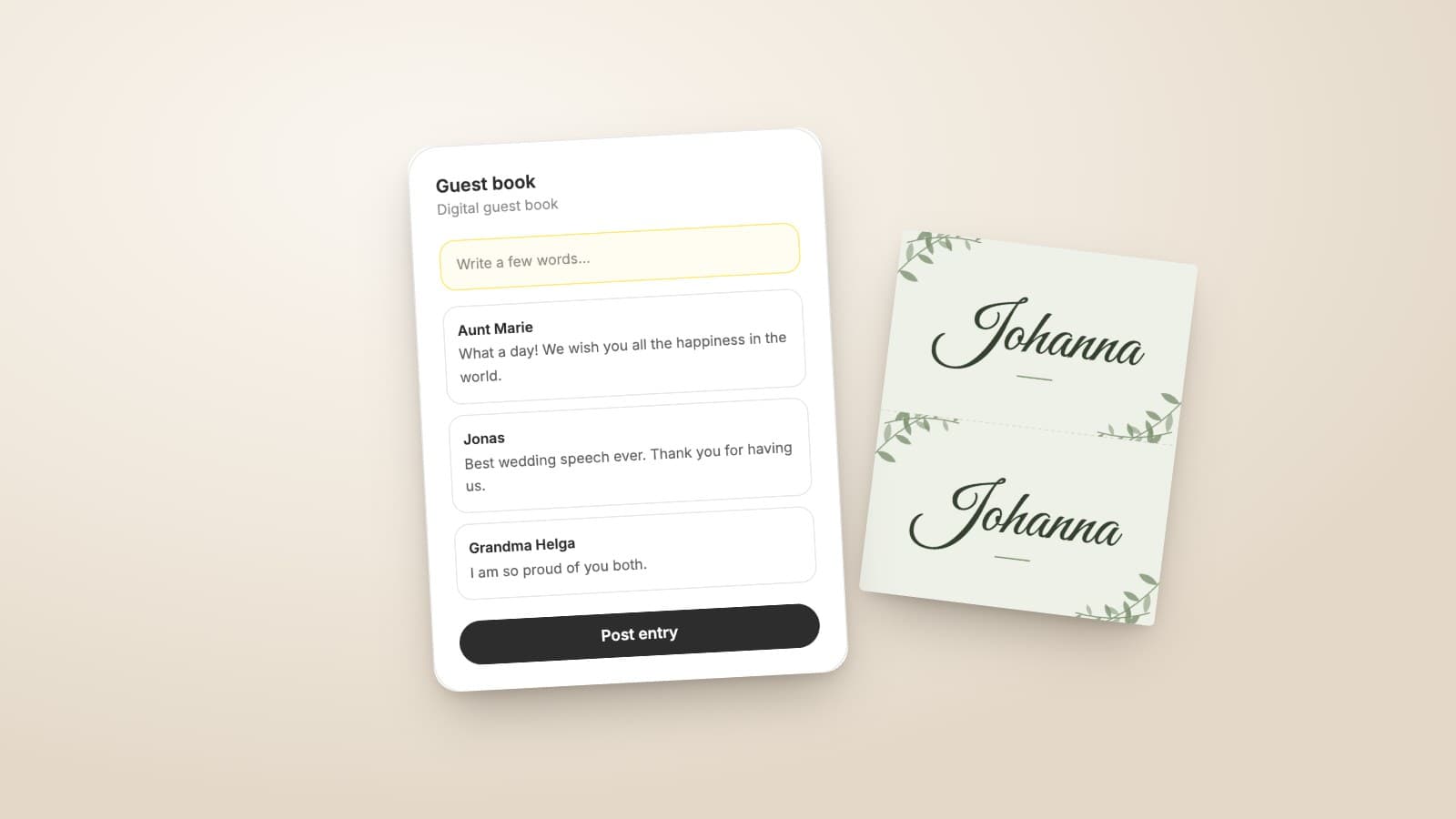
Digital Wedding Guest Book: How It Works and When Paper Is Better
What a digital guest book can do, where paper is still better, and how to get guests writing. With questions that help against the empty page.
Read article